

Blog
Valium for Anxiety and Depression in the UK: Uses, Benefits, Risks, and Prescribing Guidelines
Feb
Anxiety and depression are among the most common mental health conditions in the United Kingdom. Millions of adults experience persistent stress, panic attacks, low mood, or emotional instability each year. In some cases, doctors may prescribe medications such as Valium, known generically as diazepam, to help manage certain symptoms.
But how exactly is Valium used in the UK? Can it treat both anxiety and depression? What are the benefits and risks? And what should patients know before discussing it with their GP?
In this detailed guide, we explain everything in a clear and responsible way to help UK readers better understand this medication.
Understanding Valium (Diazepam)
Valium is the brand name for diazepam, a medicine that belongs to a group of drugs called benzodiazepines. In the UK, diazepam is classified as a prescription-only medicine (POM) and also a controlled drug due to its potential for dependence.
Diazepam works by affecting chemicals in the brain known as neurotransmitters. Specifically, it enhances the effect of GABA (gamma-aminobutyric acid), which helps calm excessive brain activity. This calming effect makes it useful for certain anxiety-related conditions.
In the UK, diazepam may be prescribed for:
- Severe anxiety disorders
- Acute stress reactions
- Panic attacks
- Muscle spasms
- Alcohol withdrawal symptoms
- Certain seizure conditions
It is typically recommended for short-term use only.
Is Valium Used for Anxiety in the UK?
Yes, diazepam may be prescribed for anxiety in specific situations.
However, UK doctors generally reserve it for:
- Short-term relief of severe anxiety
- Acute panic episodes
- Situations where symptoms are overwhelming
It is not usually considered a first-line, long-term treatment for generalised anxiety disorder (GAD). Instead, GPs may recommend therapies such as:
- Cognitive behavioural therapy (CBT)
- Selective serotonin reuptake inhibitors (SSRIs)
- Lifestyle and stress management approaches
That said, diazepam can be effective in quickly reducing symptoms such as:
- Muscle tension
- Restlessness
- Rapid heartbeat due to anxiety
- Severe agitation
- Sleep disturbance linked to acute stress
Because it acts quickly, some patients find short-term relief helpful during crisis periods.
Can Valium Treat Depression?
This is an important distinction.
Diazepam is not an antidepressant. It does not treat the root cause of depression. However, it may sometimes be prescribed if depression is accompanied by:
- Severe anxiety
- Agitation
- Insomnia
- Panic attacks
In such cases, a doctor may prescribe diazepam temporarily while longer-term treatments (such as antidepressants or therapy) take effect.
For primary depression treatment in the UK, SSRIs or other antidepressants are generally preferred.
How Diazepam Works in the Brain
To understand its benefits, it helps to know how it works.
The brain communicates using chemical messengers. During periods of anxiety or stress, the nervous system may become overstimulated. Diazepam increases the calming effect of GABA, which:
- Slows down nerve signals
- Reduces excessive stimulation
- Produces a sedative and relaxing effect
This is why patients often report:
- Feeling calmer
- Reduced panic sensations
- Less muscle tightness
- Improved short-term sleep
However, because it slows brain activity, it can also cause drowsiness.
Benefits of Valium for Anxiety Symptoms
When prescribed appropriately, diazepam may provide:
1. Rapid Relief of Acute Anxiety
Unlike some antidepressants that take weeks to work, diazepam may begin working within hours.
2. Reduced Physical Symptoms
Anxiety often causes physical symptoms such as muscle tension and shaking. Diazepam can help relax muscles.
3. Short-Term Support During Crisis
For individuals going through intense stress, short-term support may help stabilise symptoms.
4. Improved Sleep in Severe Stress
If anxiety significantly disrupts sleep, doctors may prescribe short courses to improve rest.
Risks and Side Effects
While diazepam can be effective, it is not without risks.
Common side effects may include:
- Drowsiness
- Fatigue
- Reduced concentration
- Dizziness
- Blurred vision
More serious concerns include:
Dependence Risk
Because diazepam affects brain chemistry, long-term use can lead to dependence. This is why UK guidelines recommend short-term use only.
Withdrawal Symptoms
Stopping suddenly after extended use may cause:
- Increased anxiety
- Restlessness
- Sleep problems
- Irritability
Impaired Driving
Diazepam can impair alertness. UK patients are advised not to drive if affected.
UK Prescribing Guidelines for Diazepam
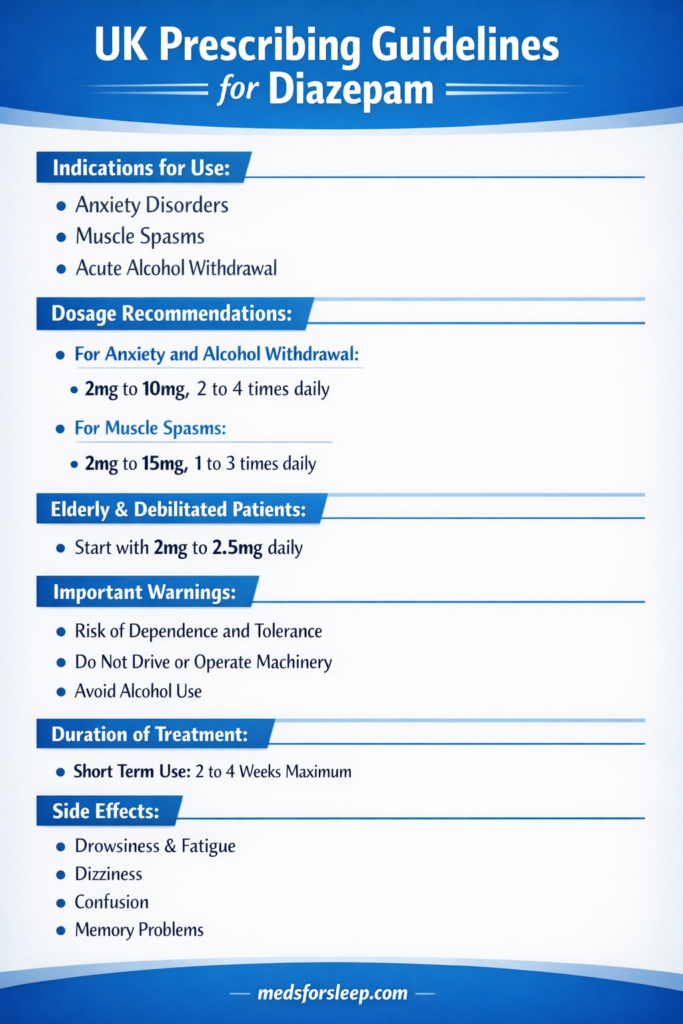
In the United Kingdom:
- Diazepam is available only via prescription.
- It is classified as a controlled drug.
- GPs typically prescribe the lowest effective dose.
- Short courses (usually 2–4 weeks) are recommended.
Doctors carefully assess medical history, including:
- Past substance use
- Existing medications
- Mental health diagnosis
- Physical health conditions
This cautious approach helps reduce misuse and dependency risks.
Valium vs Other Anxiety Treatments in the UK
Diazepam vs SSRIs
SSRIs are typically used for long-term anxiety and depression management. They take longer to work but are safer for long-term use.
Diazepam acts quickly but is not designed for long-term therapy.
Diazepam vs Therapy
Cognitive behavioural therapy (CBT) is highly recommended in the UK. Therapy addresses underlying causes rather than just symptoms.
Diazepam vs Beta-Blockers
Beta-blockers like propranolol help control physical anxiety symptoms (e.g., heart rate), but they do not provide the sedative calming effect of benzodiazepines.
Each treatment option has its place depending on individual needs.
Who Might Be Considered for Diazepam?
A UK doctor may consider diazepam if:
- Anxiety is severe and disabling
- There is acute emotional distress
- Panic attacks are intense and frequent
- Muscle spasms accompany stress
- Short-term calming is required
It is usually part of a broader treatment plan rather than a standalone solution.
Important Safety Considerations
Patients should always:
- Take diazepam exactly as prescribed
- Avoid alcohol while using it
- Inform their GP of all other medications
- Not share the medicine with others
Medical supervision is essential for safe use.
Understanding Anxiety and Depression in the UK
Mental health awareness has improved significantly across the UK. However, anxiety and depression remain common.
Symptoms of anxiety may include:
- Excessive worry
- Irritability
- Difficulty sleeping
- Muscle tension
Symptoms of depression may include:
- Persistent low mood
- Loss of interest
- Fatigue
- Poor concentration
Early consultation with a GP is strongly recommended for ongoing symptoms.
Building Informed Awareness
At MedsForSleep, we believe accurate, responsible health information is essential. Understanding how medications like diazepam work helps individuals make informed decisions in partnership with qualified healthcare professionals.
Mental health treatment is not one-size-fits-all. Some people benefit from therapy, others from antidepressants, and in certain short-term cases, benzodiazepines may be considered.
The most important step is seeking proper medical guidance.
Frequently Asked Questions
Is diazepam prescribed for depression in the UK?
It is not a primary treatment for depression, but may be used short-term if anxiety symptoms are severe.
How long can you take Valium for anxiety?
In the UK, it is generally prescribed for short periods (often 2–4 weeks).
Is diazepam addictive?
There is a risk of dependence with prolonged use, which is why medical supervision is essential.
Can a GP prescribe diazepam?
Yes, but only when clinically appropriate and typically for short-term use.
Final Thoughts
Valium (diazepam) can play a role in managing severe anxiety symptoms in the UK when prescribed responsibly. However, it is not a long-term solution for depression and carries potential risks if misused.
Anyone experiencing anxiety or depression should consult a qualified healthcare professional to determine the most appropriate treatment plan.
Responsible use, medical supervision, and informed awareness are key to safe and effective mental health care.
