

Blog
What Are the Side Effects of Sleeping Tablets? (UK 2026 Complete Guide)
Feb
Sleeping tablets can be highly effective for short-term insomnia. In fact, thousands of people across the UK use sleep medication UK options every year to manage stress-related or chronic sleep problems.
But one important question remains:
What are the side effects of sleeping tablets — and how serious are they?
Whether you’re considering prescription sleeping pills UK, strong sleeping tablets, or OTC sleep aids, understanding the risks is essential before starting treatment.
In this comprehensive guide, we’ll cover:
- Common and serious side effects
- Side effects by medication type
- Long-term risks
- Dependency concerns
- Real UK case study
- How to reduce risk safely
- Why choosing MedsForSleep matters
How Sleeping Tablets Work
Most sleeping tablets work by slowing brain activity through GABA receptors, which calm the nervous system and promote sleep.
There are three main categories used in the UK:
1️⃣ Benzodiazepines
Example: Temazepam
Stronger sedatives with higher dependency risk.
2️⃣ Z-Drugs
Examples: Zopiclone, Zolpidem
Common prescription sleeping pills that UK doctors prescribe for short-term insomnia.
3️⃣ OTC Antihistamines
Examples: Diphenhydramine, Promethazine
Milder sedative effect, but still carries side effects.
Each class has different safety profiles and risk levels.
Common Side Effects of Sleeping Tablets
Most side effects are mild and temporary, especially during short-term use.
Frequently Reported Effects:
- Daytime drowsiness
- Dizziness
- Headache
- Dry mouth
- Nausea
- Reduced concentration
- Slowed reaction time
Zopiclone-Specific Side Effect
- Metallic or bitter taste in the mouth (very common)
Comparison Table: OTC vs Prescription
| Type | Drowsiness | Memory Issues | Dependency Risk |
|---|---|---|---|
| OTC Sleeping Pills UK | Mild–Moderate | Rare | Low |
| Z-Drugs | Moderate | Possible | Moderate |
| Benzodiazepines | High | More Common | High |
Short-term use (7–14 days) generally keeps these side effects manageable.
Serious Side Effects You Should Know
Although less common, stronger sleeping tablets can cause more serious problems:
- Short-term memory loss
- Confusion (especially in elderly UK patients)
- Sleepwalking or unusual sleep behaviours
- Mood changes or worsening depression
- Breathing difficulties
- Allergic reactions
Patients taking strong sleeping tablets UK prescriptions should always follow GP advice carefully.
Side Effects by Medication Type
Zopiclone (7.5mg)
Often prescribed for short-term insomnia treatment, UK patients experience.
Common Side Effects:
- Metallic taste
- Next-day grogginess
- Dry mouth
Long-Term Risk:
- Tolerance
- Dependency
Zolpidem
Common Side Effects:
- Sleep behaviours (rare but reported)
- Headache
- Dizziness
Long-Term Risk:
- Rebound insomnia
- Psychological dependence
Temazepam
One of the strongest prescription sleeping pills that UK GPs may prescribe.
Common Side Effects:
- Heavy sedation
- Impaired coordination
Higher Risks:
- Physical dependence
- Withdrawal symptoms
- Memory impairment
OTC Sleeping Tablets (Diphenhydramine / Promethazine)
Available without prescription.
Common Side Effects:
- Grogginess
- Blurred vision
- Constipation
- Urinary retention
Even OTC sleeping pills UK users choose can cause problems if used nightly.
Long-Term Side Effects of Sleeping Tablets
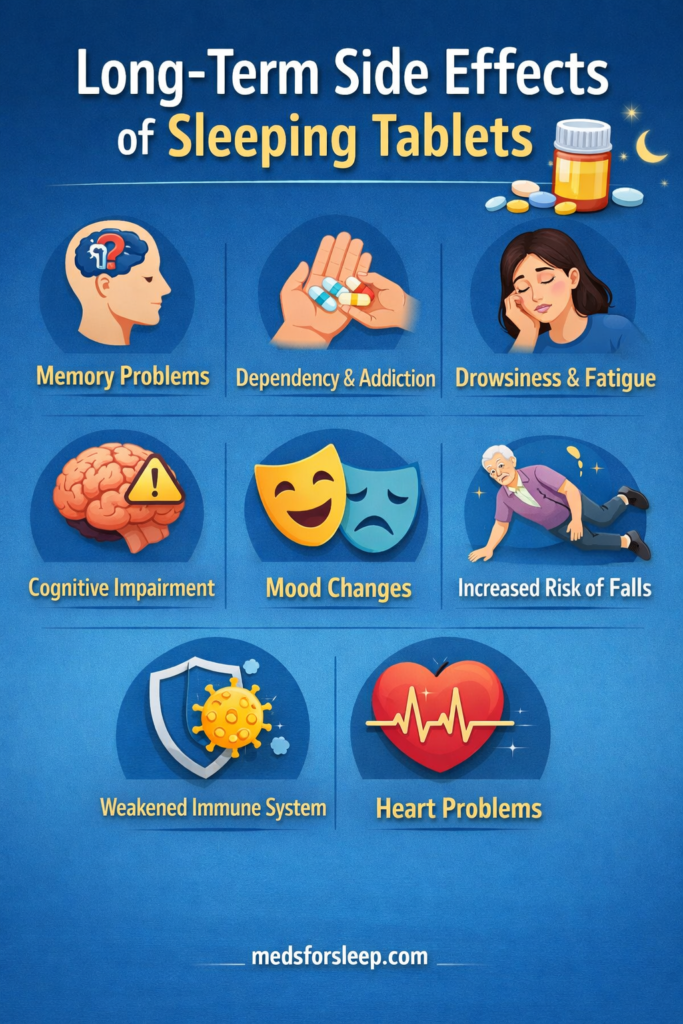
Using sleep medication UK options for more than 2–4 weeks increases the risk.
1️⃣ Tolerance
The body adapts — requiring higher doses for the same effect.
2️⃣ Dependency
Stopping suddenly can cause:
- Anxiety
- Tremors
- Rebound insomnia
- Irritability
3️⃣ Cognitive Decline
Studies suggest prolonged use may contribute to:
- Memory issues
- Reduced attention
- Slower mental processing
4️⃣ Increased Fall Risk
Particularly in elderly UK patients due to dizziness and slowed reactions.
Risk vs Duration Chart
| Duration | Risk Level |
|---|---|
| 0–2 weeks | Low |
| 2–4 weeks | Moderate |
| Over 4 weeks | High |
This is why most prescription sleeping pills UK doctors prescribe are limited to short courses.
Are Sleeping Tablets Addictive?
One of the most searched questions is:
Are sleeping pills addictive UK?
Risk Level by Type:
- Benzodiazepines → High
- Z-Drugs → Moderate
- OTC antihistamines → Low but possible psychological reliance
Dependency risk increases significantly with long-term daily use.
Who Is Most at Risk?
Certain groups should be especially cautious:
- Elderly adults
- Patients with liver or kidney conditions
- People with anxiety or depression
- Those mixing medication with alcohol
If you are unsure, always consult a healthcare professional before using strong sleeping tablets.
Real UK Case Study
Patient: Mark, 52, Manchester
Issue: Chronic insomnia
Action: Took Zopiclone nightly for 6 weeks
Result:
- Developed tolerance
- Experienced daytime fatigue
- Noticed memory lapses
His GP gradually reduced the dosage and introduced CBT-I therapy. Within 8 weeks, sleep improved without reliance on tablets.
Lesson: Long-term use increases side effect risk significantly.
How to Reduce Side Effects Safely
If you need sleeping tablets, follow these guidelines:
1️⃣ Use the lowest effective dose
2️⃣ Limit use to 7–14 days
3️⃣ Avoid alcohol completely
4️⃣ Do not combine with other sedatives
5️⃣ Monitor daytime alertness
6️⃣ Explore non-drug insomnia treatment UK options such as CBT-I
Why Choose MedsForSleep?
When searching for the best sleeping pills UK, safety and transparency matter.
MedsForSleep focuses on:
✔ Clear information about side effects
✔ UK-specific compliance guidance
✔ Responsible dosage advice
✔ Educational support for insomnia treatment in the UK
✔ Honest comparison of OTC vs prescription options
MedsForSleep vs Generic Online Sellers
| Feature | MedsForSleep | Other Sellers |
|---|---|---|
| Clear Side Effect Info | ✔ | Often limited |
| UK-Focused Safety Guidance | ✔ | Not always |
| Responsible Messaging | ✔ | Sales-driven |
| Education-Based Approach | ✔ | Minimal |
Many generic sites promote “strong sleeping tablets UK” without explaining dependency risks. MedsForSleep prioritises informed decisions and patient safety.
FAQs
What are the most common side effects of sleeping tablets?
Drowsiness, dizziness, dry mouth, and reduced concentration.
Can sleeping pills cause memory loss?
Yes, particularly benzodiazepines and long-term Z-drug use.
Are sleeping tablets safe long-term?
Generally no. Most UK guidelines recommend short-term use only.
Which sleeping pill has the fewest side effects?
OTC antihistamines tend to have milder effects but are less effective.
What happens if I take sleeping tablets every night?
Risk of tolerance, dependency, and rebound insomnia increases significantly.
Final Thoughts
Sleeping tablets can be effective for short-term insomnia relief. However, side effects range from mild daytime drowsiness to more serious long-term risks like dependency and cognitive impairment.
If you’re considering sleep medication UK options:
- Use short-term only
- Follow GP guidance
- Avoid increasing doses
- Consider behavioural therapies
MedsForSleep provides transparent UK-focused guidance so you can make safe, informed decisions about your sleep health — unlike many generic sellers that overlook safety details.
