

Blog
Are Sleeping Pills Safe for Long-Term Use in the UK? – Complete 2026 Guide
Feb
Sleep is essential for physical and mental health. Yet, millions of people in the UK struggle with insomnia, often turning to sleeping tablets to get a good night’s rest. This raises an important question:
“Are sleeping pills safe for long-term use in the UK?”
In this guide, we’ll answer this thoroughly, covering:
- How sleeping pills work
- Short-term vs long-term use
- Risks and side effects
- Strongest options and safer alternatives
- Real UK case study
- Step-by-step guide for safe usage
- Why MedsForSleep is your trusted UK sleep partner
How Sleeping Pills Work
Sleeping pills, or hypnotics, work by slowing down the central nervous system. Most commonly, they target GABA receptors in the brain, creating a sedative effect.
There are three main classes:
- Benzodiazepines (e.g., Temazepam)
- Strong sedatives
- High risk of dependency
- Z-drugs (e.g., Zopiclone, Zolpidem)
- Similar effect to benzodiazepines
- Shorter duration
- Prescribed for short-term insomnia
- OTC antihistamines (e.g., Diphenhydramine, Promethazine)
- Mild sedatives
- Safer but less effective
Strength, onset, and duration vary between drugs. For example, Zopiclone 7.5mg is considered stronger than OTC tablets, but less addictive than benzodiazepines when used correctly.
Short-Term vs Long-Term Use
The UK NHS recommends sleeping pills for short-term use only, usually 1–2 weeks. Long-term use is associated with several risks.
| Use Duration | Typical Effect | Notes |
|---|---|---|
| Short-term (≤2 weeks) | Safe & effective | Recommended by GPs |
| Medium-term (2–4 weeks) | Tolerance may develop | Monitor usage closely |
| Long-term (>4 weeks) | Dependency, cognitive impairment | Not recommended |
Even the strongest sleeping pills can lose effectiveness over time, leading to increased doses and higher risk of side effects.
Risks of Long-Term Sleeping Tablets
Long-term usage of sleeping pills carries serious risks:
1. Dependency and Addiction
- Benzodiazepines and Z-drugs can cause physical and psychological dependence
- Withdrawal may include anxiety, insomnia, or tremors
2. Tolerance
- Over time, the same dose may no longer induce sleep
- Leads to higher doses, increasing risk
3. Cognitive Impairment
- Daytime drowsiness
- Memory problems
- Reduced attention
4. Other Health Concerns
- Increased fall risk in older adults
- Liver and kidney stress
- Interaction with alcohol or other medications
Visual Aid:
Chart: Risk vs Duration of Sleeping Pills
- 0–2 weeks: Low risk
- 2–4 weeks: Moderate risk
- 4 weeks: High risk
Strongest Options and Safer Alternatives
Prescription Sleeping Pills
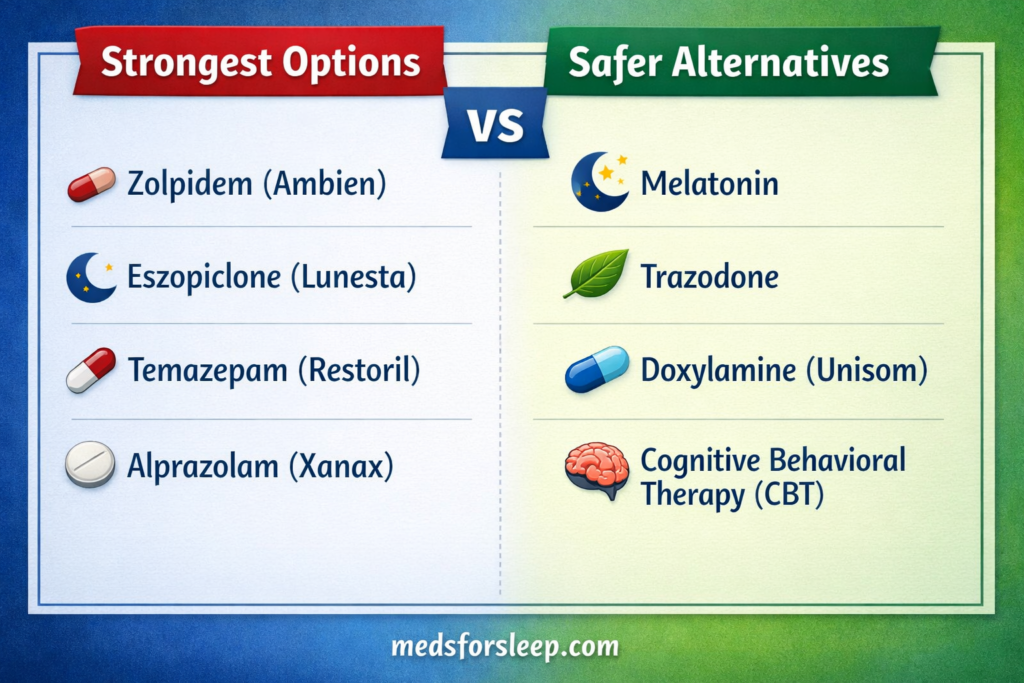
- Zopiclone 7.5mg: Short-term use, moderate dependency risk
- Zolpidem: Fast-acting, less next-day grogginess
- Temazepam: Very strong, high dependency risk
OTC Options (Weaker)
- Diphenhydramine: Mild, suitable for occasional use
- Promethazine: Slightly stronger, next-day drowsiness
Safer Long-Term Alternatives
- Cognitive Behavioral Therapy for Insomnia (CBT-I)
- Melatonin (short-term, natural sleep aid)
- Lifestyle adjustments: Sleep schedule, limiting caffeine, screen-free winding down
Real UK Case Study
Patient: Sarah, 38, London
Problem: Chronic insomnia for 6 months
Initial Approach: OTC sleeping pills every night – limited effect
GP Intervention: Prescribed Zopiclone 7.5mg for 10 days + CBT-I
Outcome:
- Improved sleep within 2 weeks
- Pills discontinued after 10 days
- Long-term sleep maintenance via CBT-I
Lesson: Strong sleeping pills are effective in the short term, but sustainable sleep requires therapy and lifestyle changes.
Step-by-Step: How to Use Sleeping Pills Safely Long-Term
- Prioritize Sleep Hygiene – consistent bedtime, no caffeine late evening
- Try OTC Options Occasionally – mild sedatives only for short-term use
- Consult a GP for prescription options if insomnia persists
- Short-Term Prescription – limit to 7–14 days
- Track Sleep Patterns – use journals or apps
- Transition to Non-Pharmacological Solutions – CBT-I, exercise, relaxation techniques
Why Choose MedsForSleep?
When it comes to sleep medication in the UK, not all sources are equal. MedsForSleep provides:
- UK-Specific Guidance – legal, safe, and expert advice
- Safety & Compliance – clear information about dosage, dependency, and duration
- Trusted Resources – comparison charts, FAQs, case studies
- Better Than Generic Sellers – other sites may exaggerate effects or ignore dependency risks
Comparison Table: MedsForSleep vs Other Sellers
| Feature | MedsForSleep | Generic Online Sellers |
|---|---|---|
| UK Legal Guidance | ✔ | Often unclear |
| Safety Warnings | ✔ | Limited |
| Expert Case Studies | ✔ | Rare |
| Responsible Recommendations | ✔ | Exaggerated claims |
FAQs
Q1: Can I take sleeping pills every night in the UK?
A: Not recommended. Prescription sleeping pills are safe only.
Q2: Are Z-drugs safer than benzodiazepines long-term?
A: Slightly, but both require caution.
Q3: Can OTC sleeping pills be used long-term?
A: No. Even OTC drugs can cause side effects if overused.
Q4: What is the safest long-term option for insomnia?
A: CBT-I therapy combined with good sleep hygiene.
Q5: Can MedsForSleep help me choose the right sleep aid?
A: Yes. We provide UK-specific, safe guidance and educational resources.
Final Thoughts
Long-term use of sleeping pills in the UK is not recommended. Strong prescription medications like Zopiclone, Zolpidem, or Temazepam are effective short-term, but dependency and side effects increase over time.
The safest path combines short-term prescription use, OTC options for occasional relief, and non-pharmacological treatments like CBT-I.
MedsForSleep ensures you get expert guidance, safety-first advice, and clear UK-specific recommendations — making it a better choice than generic online sellers.
